

UNLV faculty to use grant funds to study special education teacher supports, teacher retention
07/15/2024
By Lorraine Longhi, Communications Coordinator, National Institute for the Advancement of Education (NIAE)
July 15, 2024
Supporting special education teachers. Collaborating with principals to retain teachers. Helping students enhance their math writing instruction.
Four teams of University of Nevada, Las Vegas (UNLV) faculty members will research these issues as the latest round of grant awardees for the National Institute for the Advancement of Education (NIAE).
The NIAE, a semi-autonomous research unit housed inside UNLV’s College of Education, awarded the grants as part of its 2024-2025 grant program, which centered around teacher retention practices.
The grant program will provide funding between $2,500 and $25,000 for the selected projects. The application was open to all Nevada System of Higher Education (NSHE) faculty, UNLV graduate students, and practitioners/community members working in education-related organizations in Nevada.
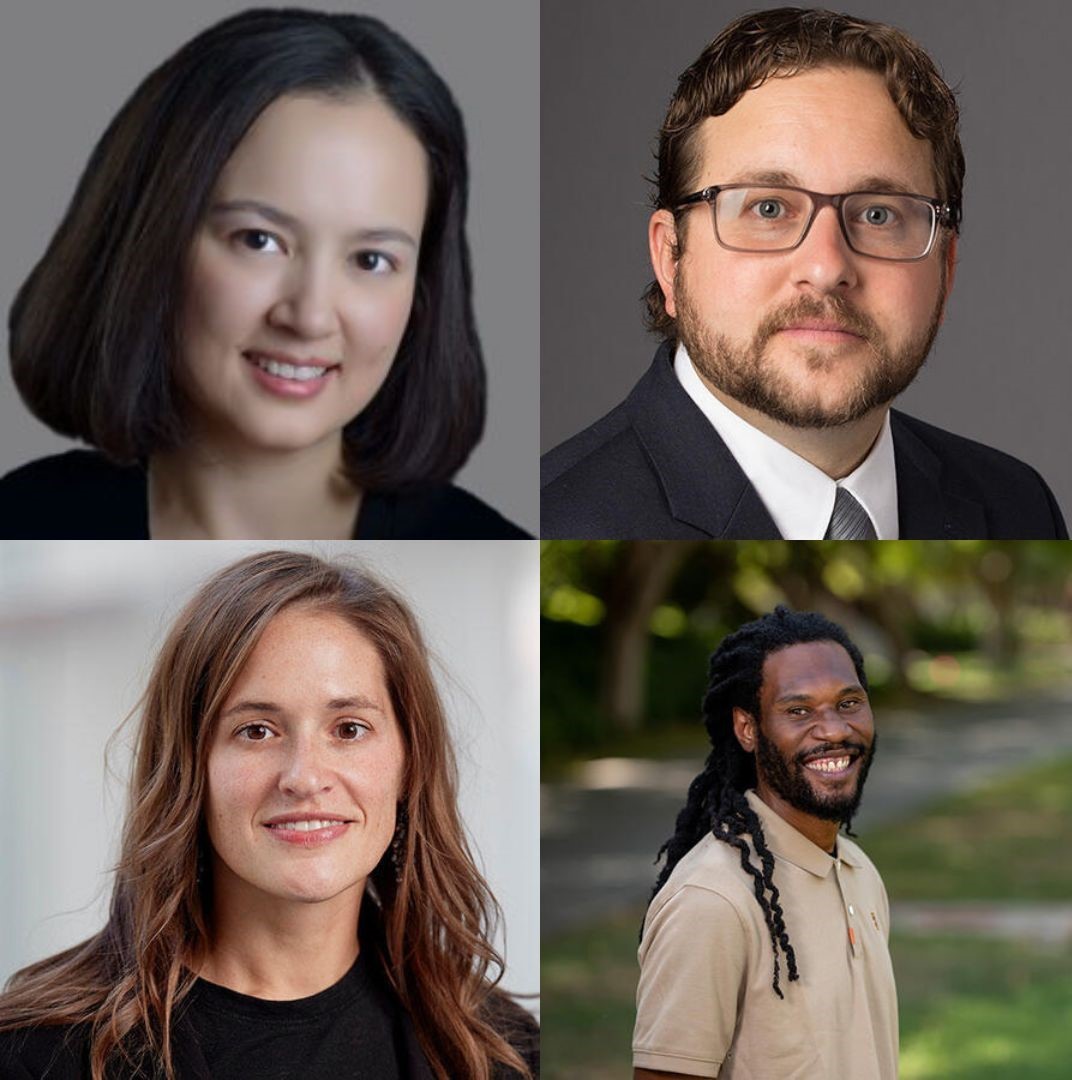
Four out of twelve applications were selected by a review committee that included active research faculty and administrators from UNLV’s College of Education. The four project leads and their projects include:
- Catherine Bacos, Ph.D., significant disability curriculum specialist in the Department of Early Childhood, Multilingual and Special Education, will focus on reducing the demands placed on special education teachers and increasing supports like professional development and curriculum resources.
- Jacob Skousen, Ed.D., assistant professor from the Department of Educational Psychology, Leadership, and Higher Education, will work with local principals to develop innovative strategies for retaining teachers.
- Erin Smith, Ph.D., assistant professor of mathematics education in the Department of Teaching and Learning, will study how to enhance mathematical writing instruction for students and increase their mathematical writing competencies.
- Jabari Taylor, Psy.D., assistant professor-in-residence in the Department of Early Childhood, Multilingual and Special Education, will work with special education teachers and their paraprofessionals to generate professional development opportunities to support them.
“At NIAE, we focus on generating and supporting innovative research that explores pressing issues in education today,” said Dr. Maria Marinch, executive director for the Institute. “These projects are aligned with the NIAE’s mission and goals, and we are looking forward to supporting the research teams, and sharing the findings once available.”
While the Institute has an extensive focus area that supports education innovation in PK-20 and workforce development, the preferred grant topics may vary per cycle. Grants focusing on the cycle topic of teacher retention took precedence in the 2024-2025 cycle.
For teachers who graduate from UNLV and lose contact with the school during their initial, formative teaching years, burnout is common, Dr. Taylor said. It’s therefore paramount that researchers keep on top of teachers’ progress to determine how best to support them.
That holds true when it comes to the relationship between special education teachers and paraprofessionals, who provide support to teachers and students in the classroom, but who may not receive enough guidance or clarity around their job responsibilities, Taylor said.
“They work as a team in the classroom to assist students with special education,” he said. “We’re trying to get behind the relationship and what are some things that will make that relationship, which ultimately will inform or have an impact on a student’s teaching.”
Dr. Bacos works in the Office of General Curriculum Access, whose mission is to support teachers who serve students with significant disabilities and extensive support needs. Special education teachers have unique challenges because of the unique workloads they have and the mountain of responsibilities their jobs entail, she said.
“We know from the research that when you provide them with quality resources and teacher professional development, that their working conditions improve, and that has an impact on teacher attrition and retention,” she said.
Additionally, NIAE will assist in connecting researchers with resources to develop and execute their research, pursue additional funding and disseminate their findings.
For Dr. Smith and her team, who have been working on their project area for almost two years, the grant will allow them to test out ideas and gather teacher feedback on the effectiveness of the mathematical writing intervention.
“Teacher feedback on any kind of school-based intervention is a critical step in just understanding the feasibility,” said Smith. “It’s been a long time since the three of us on this project and our graduate assistant have been in the classroom…that’s different from being in a classroom with kids and understanding the realities and demands of the classroom.”
Dr. Skousen, a former teacher and principal, has also experienced firsthand the challenges that educators face in K-12 education. While the research he has undertaken in higher education can supplement the work of educators, researchers can often experience a disconnect between the work of educators and practitioners.
“This opportunity, for me, is connecting me to practice and to people that are doing the work daily in K-12 schools,” he said. “I’m just excited about that opportunity to bridge that theory/practice gap that is often discussed.”
The next grant cycle for NIAE is tentatively scheduled for the spring of 2026. Dr. Amanda Hoffman, the Institute’s research associate, will work closely with current recipients to coordinate the awards and support the research teams, as well as develop the next grant cycle, with a focus topic to be selected based on pressing needs arising in PK-20 education.
“We are excited to support these scholars and their research projects, as they work to generate innovation in education,” said Dr. Hoffman.
The NIAE is self-funded and leverages community and donor investments to pursue interdisciplinary research that uses a community-based approach to inform practice and policy in PK-20 and workforce development.
“We are planning to continue funding grants with impact in practice, which can be made possible through donations to the Institute,” added Dr. Hoffman.
The Institute will collaborate with recipients to disseminate their research findings after the projects close in the summer of 2025, and will also assist in helping identify additional funding to extend their projects.
The content of this article is produced in collaboration with the faculty, research, practitioner and community partners featured herein, and the National Institute for the Advancement of Education (NIAE), an interdisciplinary institute housed at the University Nevada, Las Vegas (UNLV) College of Education that engages in interdisciplinary research-practice-policy efforts that transform PK-20 education through innovation, excellence, evidence, and equity.
For more information about NIAE, visit niae.sites.unlv.edu.


