

IT Pipeline program teaches Nevada students hands-on computer skills
03/13/2024
By Lorraine Longhi, Communications Coordinator, National Institute for the Advancement of Education (NIAE)
March 13, 2024
Mark Hosana was a freshman at Sierra Vista High School when he was accidentally placed in a computer science class. Despite not knowing anything about the topic, he quickly learned how the skills gleaned from the class could teach him how to create and make things come to life.
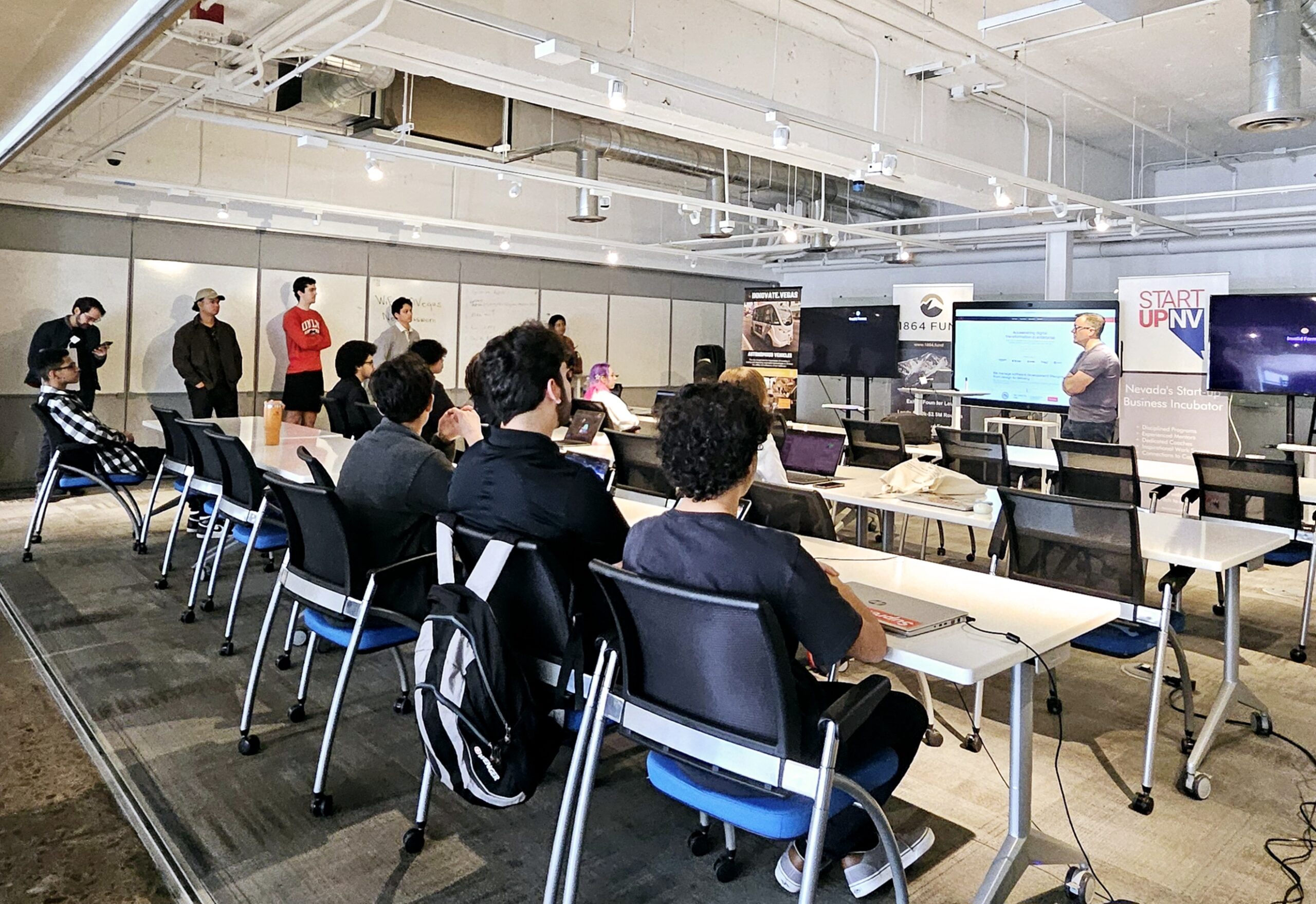
Hosana, now a 17-year-old junior at Sierra Vista, was on hand last month with several other students to tour the International Innovation Center in downtown Las Vegas, as part of UNLV’s IT Pipeline Program, which gives Nevada high school juniors and seniors an opportunity to develop skills in information technology, computer science, and cybersecurity.
The yearlong program, which is funded through the Governor’s Office of Science, Innovation and Technology (OSIT), also connects students to local job opportunities and teaches them how to find and secure employment.
“At first I was not confident with applying,” Hosana said of the program. “But I just did it, and now I’m here with all these opportunities.”
For Dr. MiHee Park, a coordinator for the project who studied workforce education and development at Pennsylvania State University, workforce education is not just about studying trends, but about assessing what is needed to close gaps.
Nationally and in Nevada, IT is a promising field with high-demand and high-paying jobs, but not everyone is aware of how to break into those fields, particularly young students, Park said.
“We can give them abundant information that they cannot get from their family or friends…they can see the world from a different perspective,” Park said of the program’s value to students.
In partnership with UNLV’s College of Education; College of Engineering; Center for Mathematics, Science, and Engineering Education; the National Institute for the Advancement of Education; and Clark County School District schools, the program connects students to local job opportunities by also working with city and business partners like Codingscape, a software engineering and consulting firm.
Dr. Xue Xing, the project’s lead and an associate professor of career-technical and postsecondary education at UNLV’s College of Education, called the project the most inclusive workforce talent pipeline program in the state, with dual enrollment components for students who come from diverse backgrounds.
Through her work at Penn State, Park said she was particularly interested in how to encourage young women to enter STEM fields.
Of the roughly 100 students who applied for the program this year, 29 were accepted and enrolled, and nearly one-third were women.
While there is established literature about what encourages marginalized populations to enter into STEM fields, Park says some of that information is outdated, and a new generation of technologically savvy students are strongly motivated to enter IT and STEM fields on their own, despite not being influenced by family to enter those fields.
That’s particularly true of women, many of whom have reported being the only woman in their fields.
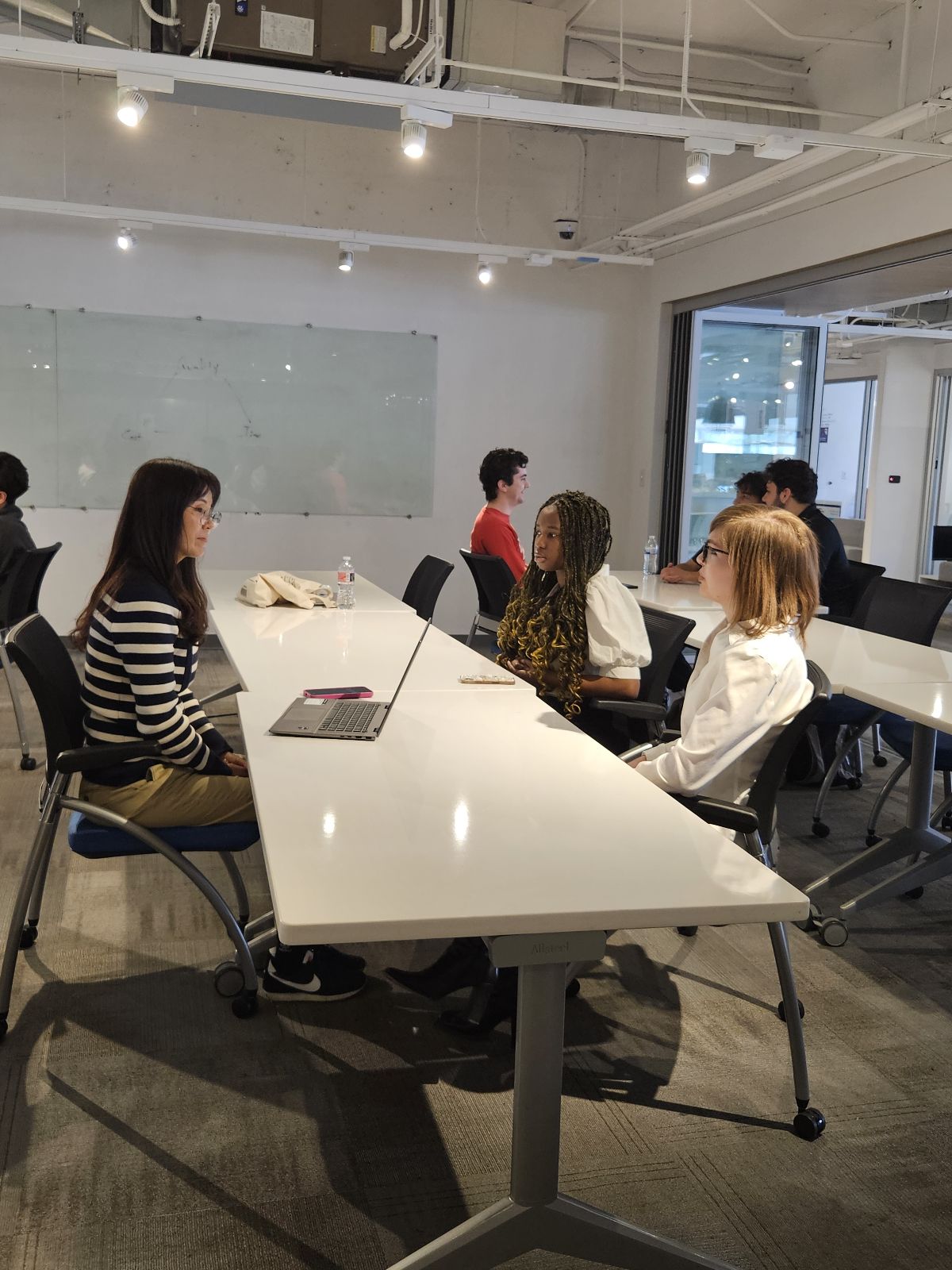
“They have a strong motivation to encourage other girls who are interested in STEM and bring them in,” Park said.
For Aliya Ojuade, a senior at Rancho High School, the program is particularly valuable for those interested in entering the field of IT but who don’t know where to start.
“Having the people able to guide you like the mentors we have and all the opportunities they give us is really helpful,” Ojuade said. “Having people there to lead you and let you know what to do is better than being on your own.”
Several students cited CS135–a computer science class at UNLV that teaches them how to code, and one of the six college credits students in the program can take–as their favorite part of the program so far.
“That was my first time taking a class solely for coding and learning the language,” Ojuade said. “It’s really rewarding when you’re typing in your code and it actually works.”
For students who may be intimidated to apply for the program, Hosana said interested students don’t have to be a “coding god” to apply.
“I came in with not that much knowledge, and I think I’m coming out of the program with much more knowledge than I started with,” he said.
The content of this article is produced in collaboration with the faculty, research, practitioner and community partners featured herein, and the National Institute for the Advancement of Education (NIAE), an interdisciplinary institute housed at the University Nevada, Las Vegas (UNLV) College of Education that engages in interdisciplinary research-practice-policy efforts that transform PK-20 education through innovation, excellence, evidence, and equity.
For more information about NIAE, visit niae.sites.unlv.edu.


